Thursday and Friday, January 18 & 19, 2024
HAL Grand Australia & NZ Cruise
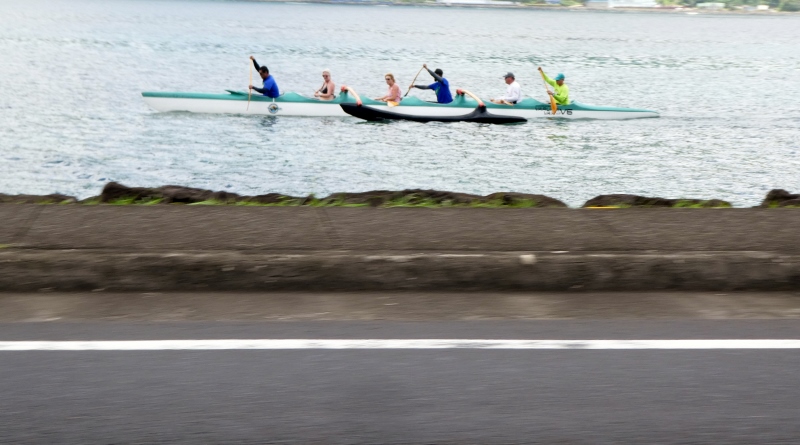
After our interesting day in the Micronesian “Line of Islands” of Kiribati, specifically Kiritimati (once known as Christmas Island), we sailed right back into Polynesia and visited the islands of Samoa!!! Our first stop was American Samoa. We docked at Pago Pago on the island of Tutuila. American Samoa is an unincorporated territory of the United States located southeast of the island country of Samoa (formerly known as Western Samoa). These islands were once known as the Navigator Islands because of the Samoan’s amazing seafaring skills. It was early in the 19th century that American whaling vessels began stopping in these islands for fresh water, firewood, and provisions. By 1900, under the 1899 Tripartite Convention, the United States annexed a small group of eastern Samoa islands. The United States Naval Station Tutuila was built on Tutuila Island at the harbor of Pago Pago. Several of the buildings are now on the National Register of Historic Places. But, by 1951, the control of American Samoa was transferred from the Navy to the Department of the interior. The Naval Station Tutuila was closed, and the harbor reverted to commercial use.
Here are some American Samoa tidbits:
American Samoa consists of five main islands and 2 atolls.
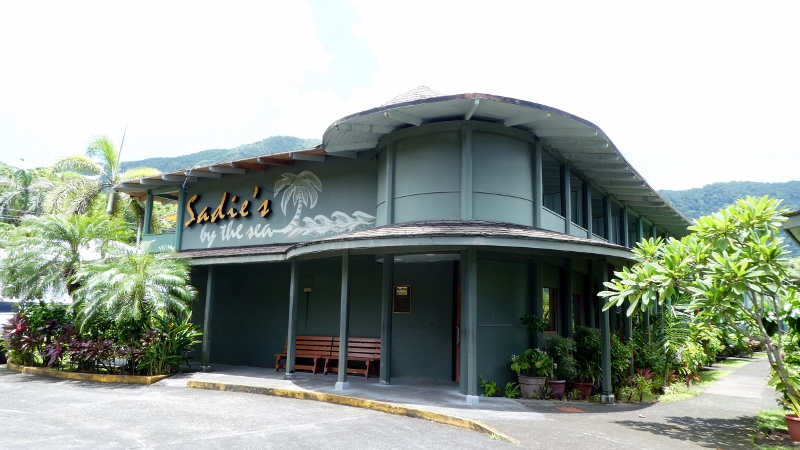
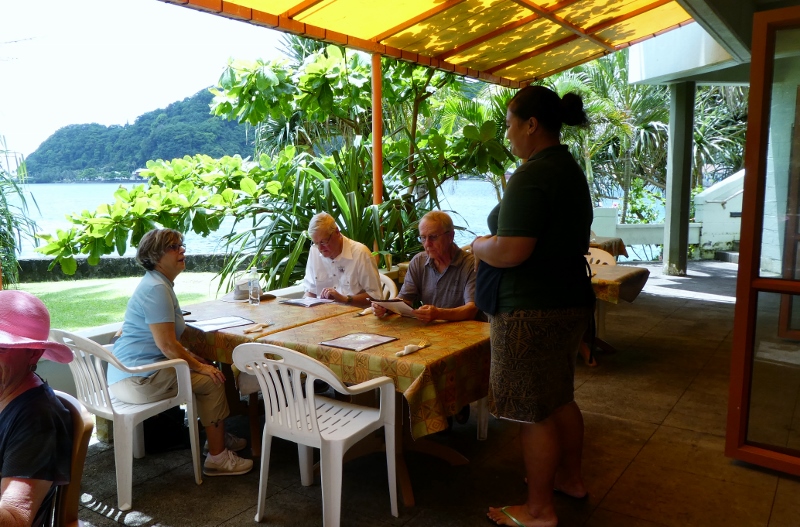
In late 1916 and early 1917, W. Somerset Maugham, sailing from Hawaii to Tahiti but delayed by a quarantine inspection, came to American Samoa. Traveling aboard the same ship was Miss Sadie Thompson (a prostitute evicted from Hawaii), as well as a medical missionary and his wife. They all checked into a lodging house described by Maugham as a “dilapidated lodging house with a corrugated tin roof.” Today, having been remodeled and renovated, it is known as “Sadie’s by the Sea” and is listed on the National Register of Historic Places. It became famous because Maugham wrote his short story, Rain (originally titled Miss Thompson) in 1921. It was based on these very people. It also described the weather of these islands. Do note: near Pago Pago is Rainmaker Mountain, which gives Pago Pago Harbor an unusually high rainfall. The story has been noted as one of Maugham’s more “noteworthy” works. It has been adapted for both stage and screen since 1928; last released in 1953 starring Rita Hayworth and Jose Ferrer.
In 1924, Margaret Mead began the fieldwork for her doctoral dissertation in anthropology at Columbia University. Her work, Coming of Age in Samoa was published in 1928.
From 1961 to 1972, Nasa’s Apollo program landed several missions near Tutuila Island.
In 1966, President and Mrs. Lyndon Johnson visited American Samoa. Mrs. Johnson dedicated the Manulele Tausala (Lady Bird) Elementary School. The territory’s only hospital was renamed the LBJ Tropical Medical Center in his honor. Johnson is the only US president to have visited American Samoa.
Pope Paul visited Pago Pago in 1970 on his way to Australia.
The National Park of American Samoa was opened in 1993. It is the only U.S. National Park in the Southern Hemisphere and is noted for the Pacific tree boa and the Flying Megabat with its 3-foot wingspan!!!
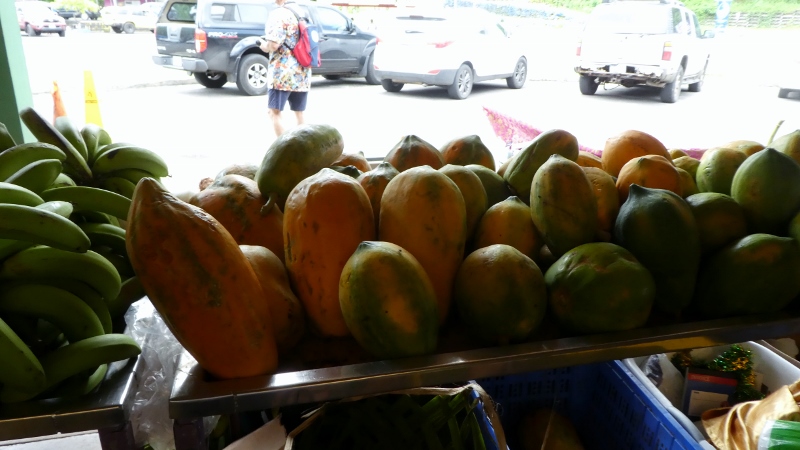
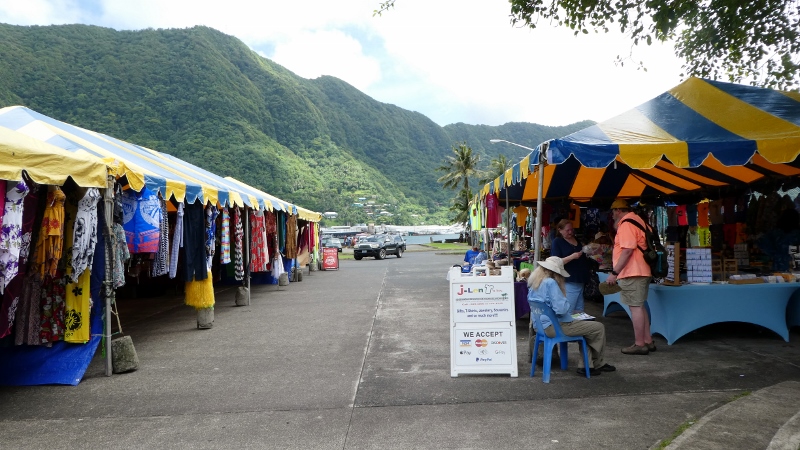
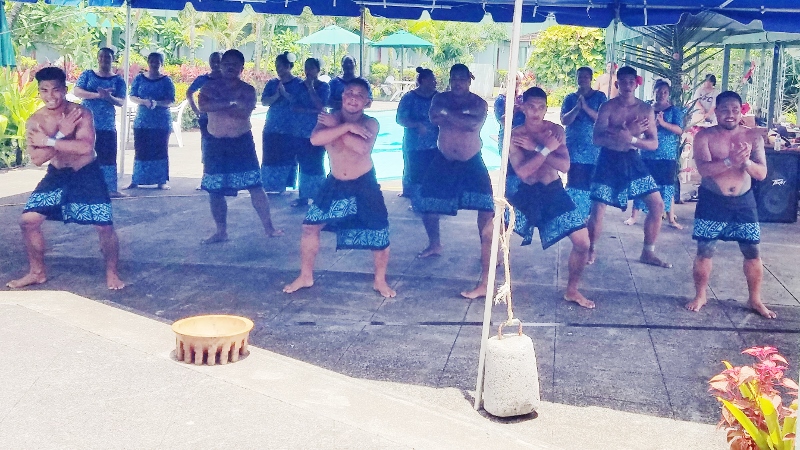
Ok, let’s look at the photos!!!
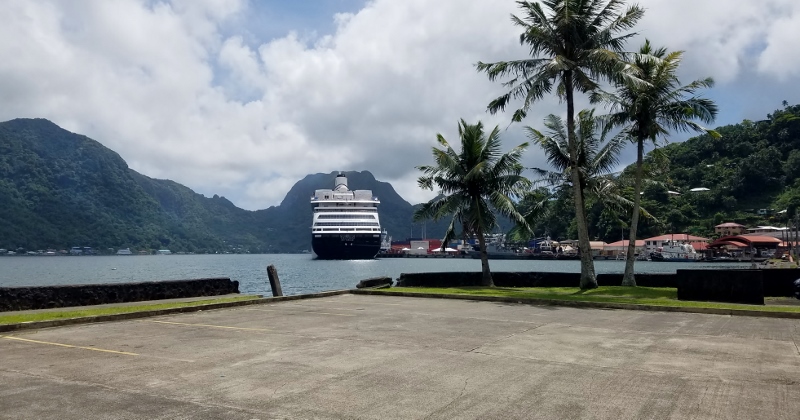


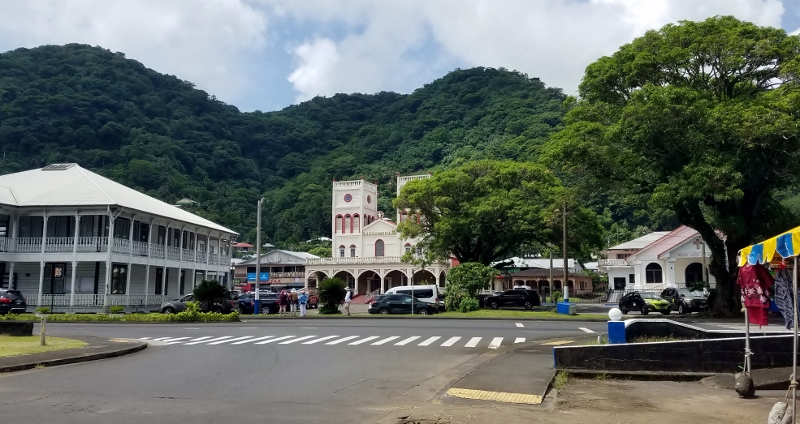


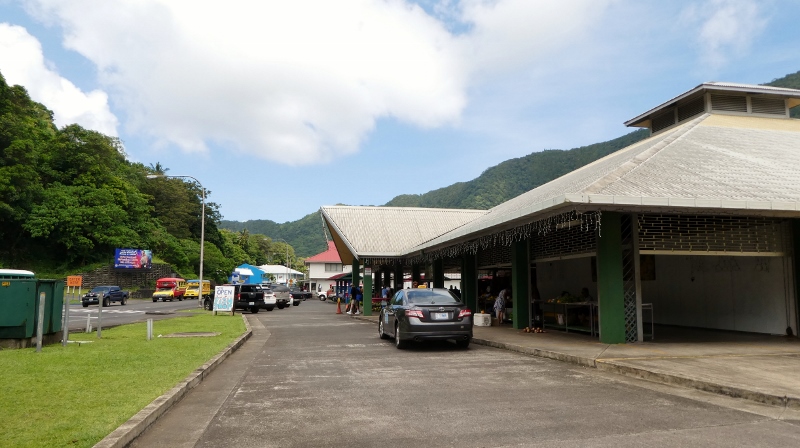
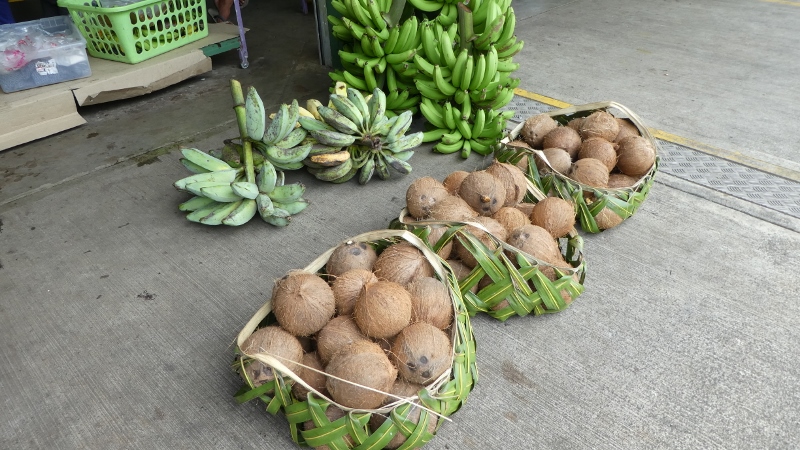







And then, we sailed to Apia, Samoa.
Once known as Western Samoa, today it incorporates two main islands (Upolu and Savai’i) along with two smaller islands and several even smaller uninhabited islands. Since1997, it is known as the Independent State of Samoa. It is a unitary parliamentary democracy; and is a sovereign state and member of the Commonwealth of Nations.
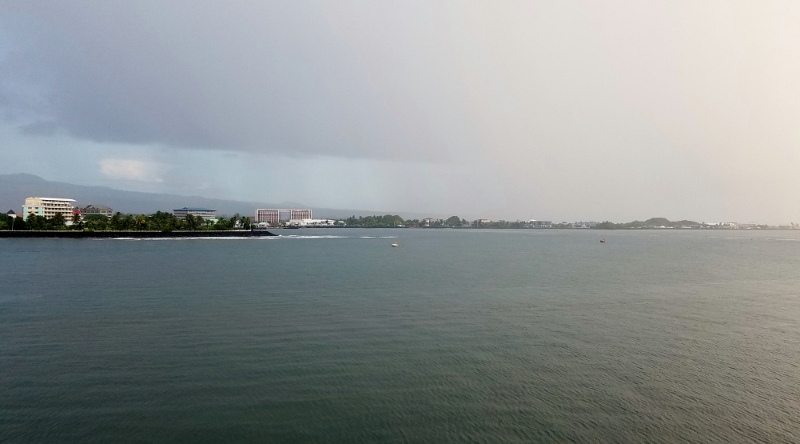
Apia is the capital and largest city of Samoa. Actually, it is the only city of Samoa!!!
Here are some tidbits for Samoa:
Samoa was discovered and settled by the Lapita people (Austronesian people who spoke Oceanic languages) about 3500 years ago.
Samoans are known for skill of navigation, especially at night with only the use of stars!!! All of Samoa was known as the Navigator Islands.
Once a colony of the German Empire from 1899 to 1915, it came under a joint British/New Zealand colonial administration until January 1962, when it became independent.
Christian missionary work in Samoa began in 1830 when John Willams of the London Missionary Society arrived from the Cook Islands in Tahiti.
Robert Louis Stevenson, Edinburgh-born, traveled widely and began a 3-year tour of the South Pacific in 1888. Choosing to settle in Samoa, he bought 314 acres of land and built his family home. By 1891, his mansion, Villa Vailima was completed and named for the nearby village. Stevenson was popular with the local community, who gave him the nickname, Tusitala (Teller of Tales). Steveson died in 1894. He is buried in Mount Vaea overlooking Vailima. Villa Vailima was then used as the residence of the governor of German Samoa; and later by the New Zealand Mandatory Authority’s administrator; and eventually by the Samoan Head of State from the time of Steveson’s death until it was badly damaged in a hurricane. After a period of renovation funded by American businessmen and missionaries, Jim Winegar and Tiafaiga Rex Maughan, the building was reopened on December 5,1994 as the Robert Louis Stevenson Museum.
In 1933, Aggie Grey, a Samoan entrepreneur, opened Aggie Grey’s Hotel & Bungalows in Apia. It became a popular gathering place for American servicemen stationed in Samoa during WWII. The hotel became part of the Sheraton chain. The hotel has been closed for renovations and it appears, according to their web-site that it will reopen in March 2024.
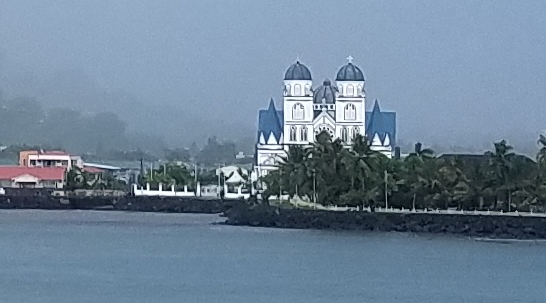
The most striking building to be seen from the harbor is the Immaculate Conception Cathedral. Originally built in 1857 but damaged by the earthquake of 2009, it was repaired, restored, and extended. The new cathedral was opened on June 2, 2014.
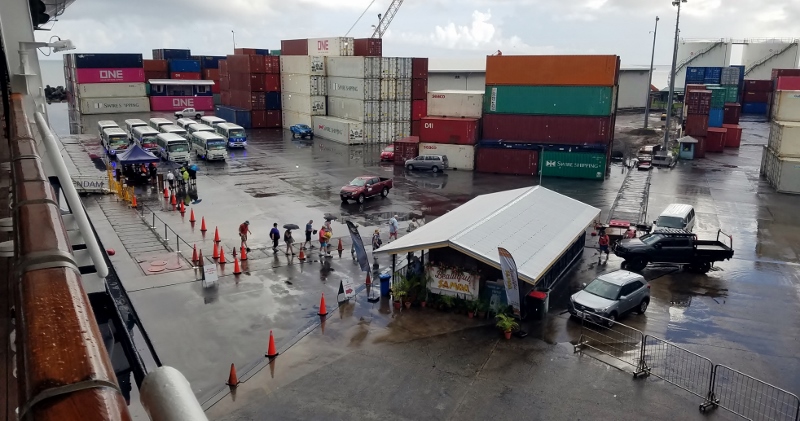
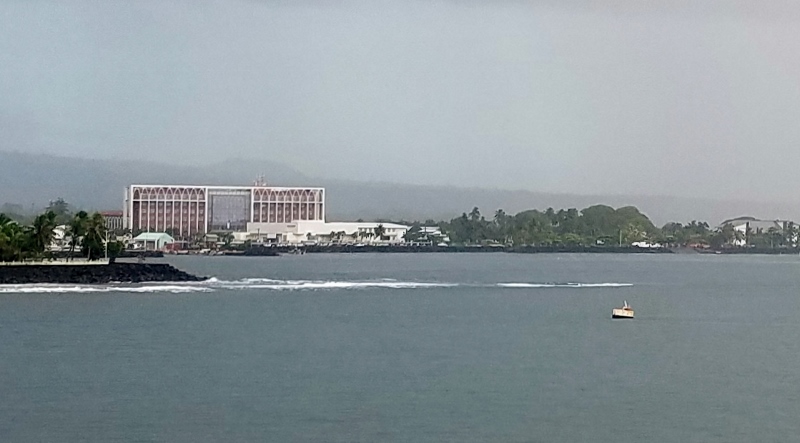
And here are the photos from Apia, Samoa:


We are now on our way to the Melanesian Islands of Fiji.
We’ll be sharing that adventure with you, soon!!!
 RovingRaconteurs.com