We may have left Australia, but we are still exploring Australasia as we now tour New Zealand. The plan was to cross the Tasman Sea and start this next adventure viewing Milford Sound and Fjord National Park. Alas, rough seas (which are extremely common in the Tasman Sea) forced a change in plans and routing. We wound up heading directly to Port Chalmers and Dunedin on the South Island of New Zealand.
And that is where this narrative begins:
We’ve been told, the last large habitable land to be settled by humans was New Zealand. From about 1280 to 1350, the Polynesians established settlements on these islands and developed the distinctive Māori culture. The European explorers did not find these islands until Abel Tasman sighted and recorded them in 1642. By 1840, the islands became a British Colony with the signing of the Waitangi Treaty. It then took until 1987 and the Constitution Act of 1986 for New Zealand to acquire full independence. Today, it is a free-standing Constitutional Monarchy whose parliament has unlimited sovereign power.
New Zealand consists of two main landmasses: the North Island and the South Island. Stewart Island and over 700 smaller islands lie offshore. For governmental purposes, New Zealand is divided into 16 administrative regions.
Here are some photos:
New Zealand is comprised of 2 main land masses: South Island and North island, along with Stewart Island and over 700 smaller islands that lie offshore. For administrative purposes, there are 16 administrative regions. (CIA, Public Domain)
Starting with Port Chalmers/Dunedin:
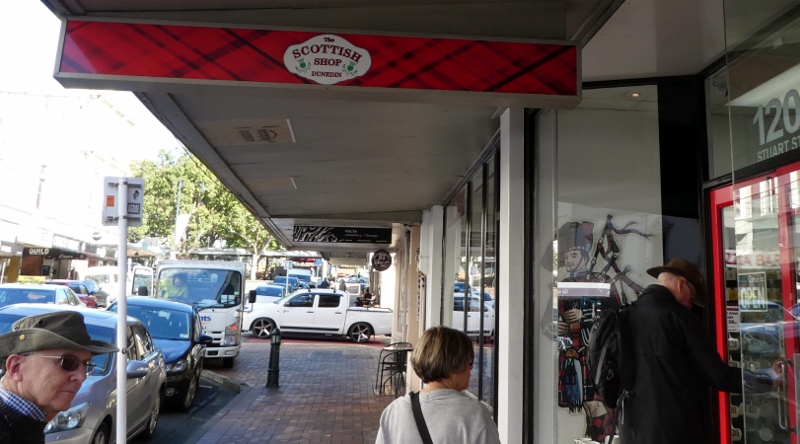
Due to the rough Tasman Sea, we did not tour Milford Sound or Fjord National Park in the Southland Region. Instead, we docked in Port Chalmers which is the gateway to Dunedin. We hired a cab, and made our way to Dunedin in the Otago Region.Dunedin is the second-largest city (after Christchurch) on the South Island of New Zealand. In old Gaelic, Dunedin is the word for Edinburgh, the city in Scotland. Dunedin’s Scottish founders envisioned this city as the “Edinburgh of the South.”Dunedin is home to the country’s only kilt maker. And that is why we sought the Scottish Shop–a wonderful source of all things Scottish!!! And a great place to acquire kilt-related accessories.This is the Dunedin Octagon, the city center, laid out in 1846. Many significant buildings are located here. In this view, St. Paul’s Anglican Cathedral is on the left; Town Hall is on the right.
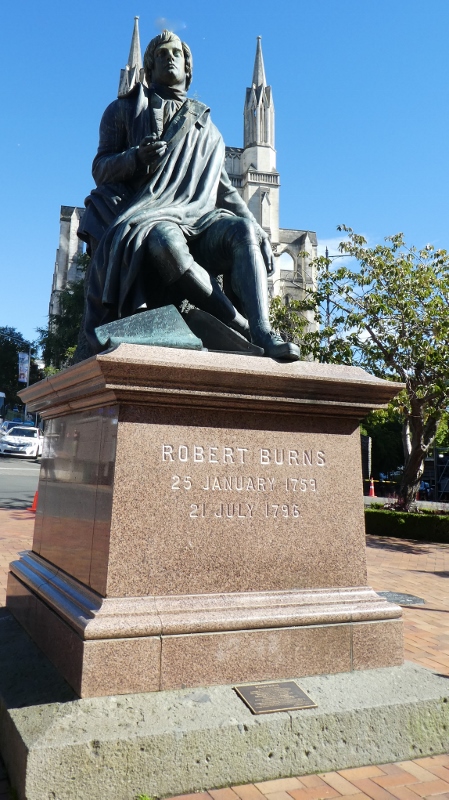
Also in the Octagon is this sculpture, by Sir John Steell, of the poet Robert Burns whose nephew, Thomas Burns, was one of the founders of the city.
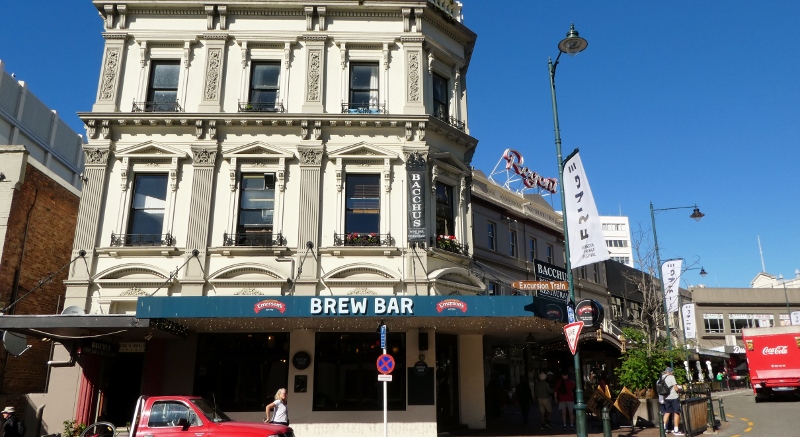
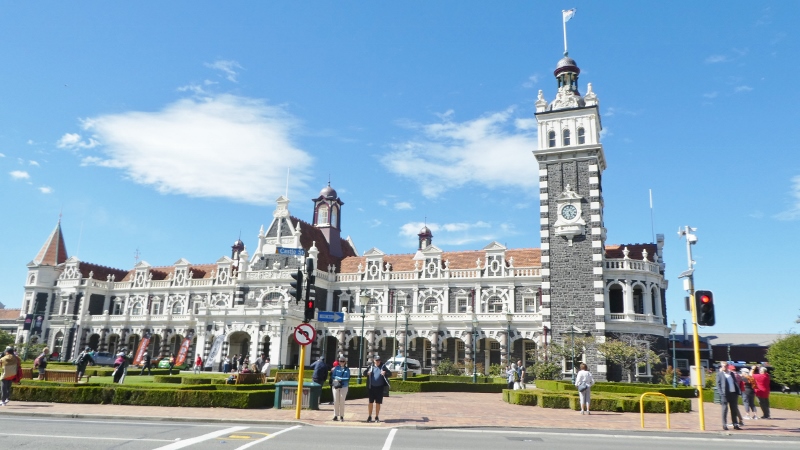
Across the street from the Octagon is the Emerson Brew Bar where we sampled the beer and enjoyed lunch.Emerson’s Brewery is located in Dunedin.We tried their “Hole in the Hedge” brew but didn’t care for it!!!We had other options: Roger tried the Pilsner.Dunedin is filled with many lovely Victorian and Edwardian buildings.This is the Dunedin Railway Station, constructed in 1903 and opened in 1906. The station now serves tourist trains; the ground floor houses a restaurant; the upper floor is home to the New Zealand Sports Hall of Fame, and the Otago Art Society.As the day came to a close, we returned to Port Chalmers and awaited the sail-away to our next port: Timaru.
Then, Timaru:
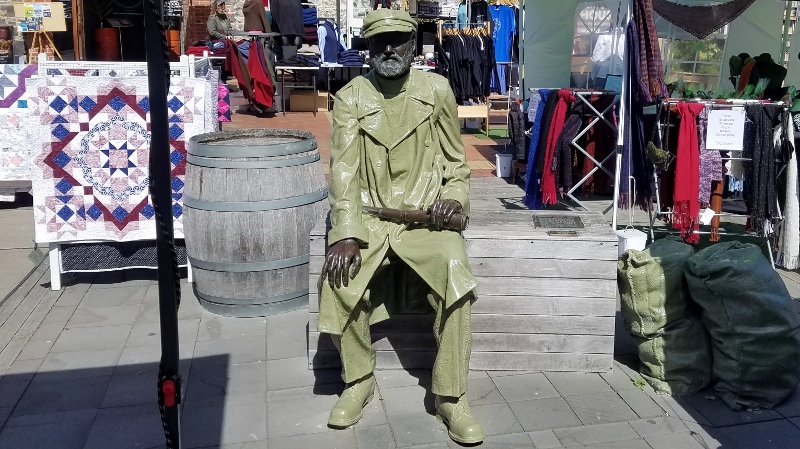
Timaru is a port city on the southern Canterbury Region. The Maori were the first inhabitants around 1400 AD. European settlement began in 1839 with a whaling station. In 1859, the SS Strathallan arrived from England with a party of 120 immigrants.This is a sculpture of Capt. Henry Cain who opened the first general store in this early and very busy port area. Timaru grew from there!!! And shopping remains an interesting and happy experience here!!!And yes, of course, we shopped the charming and inviting stores in town!!!And we visited the South Canterbury Museum to view Maori art, learn about the maritime history of the area, and learn about that pioneering spirit that created Timaru!!!
We viewed a Wallaby…..
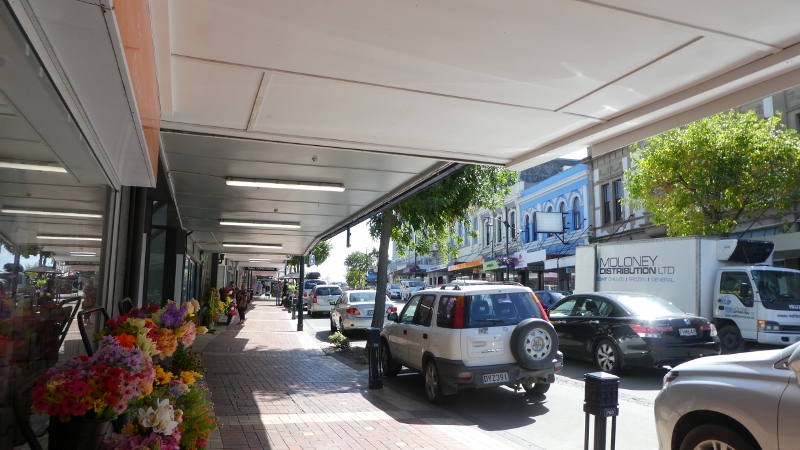
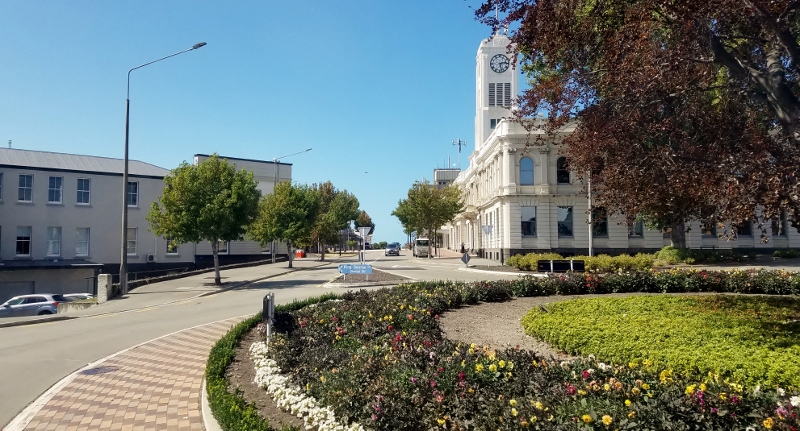
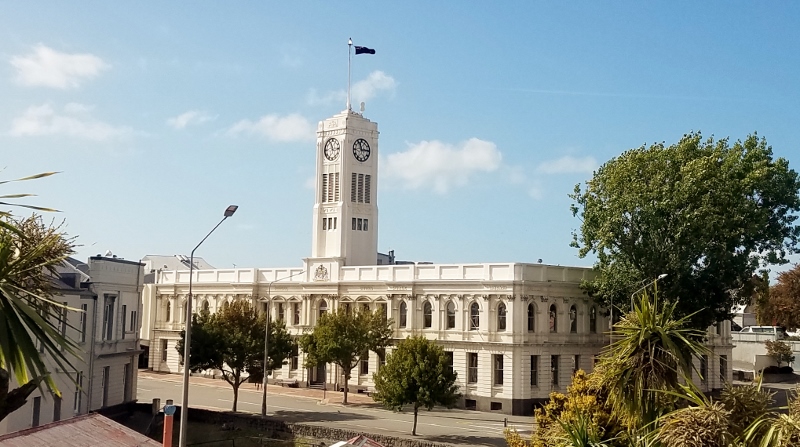
…..and the Blue Penguins.We walked thru town…..…..admired the architecture…..…..and smiled at the whimsy!!!Then we returned to the MS Volendam and set off to our next port-or-call: Akaroa.
Ending our South Island tour in Akaroa:
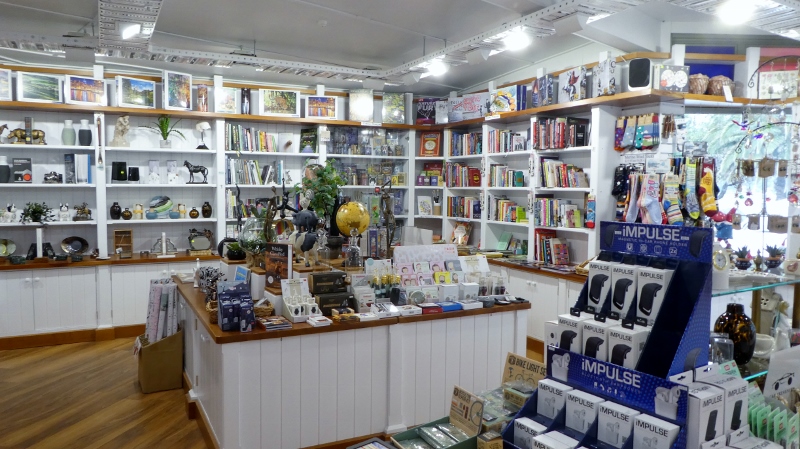
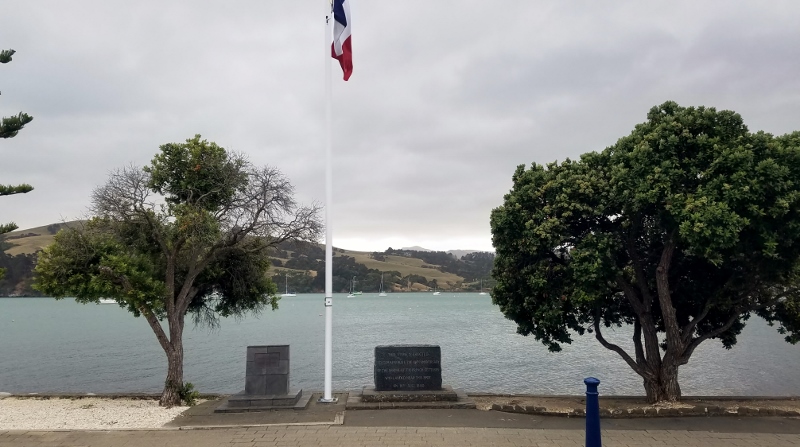
Charming Akaroa is a small town on Banks Peninsula in the Canterbury Region. It is a popular resort town drawing many visitors, especially from he Christchurch area.This is a tender port and the dock is right in the center of town.This is a small town with a population of about 800 residents.We came to shore bringing nearly 1000 passengers and crew to explore the town. They handled us all very well!!! We ate, drank and shopped in charming shops and cafes. We felt very welcome!!!We shopped the lovely and well-stocked shops.We viewed their memorials.
And we admired the local art and town heroes. This is a monument to Akaroa native son, Frank Worsley, captain of the Endurance which was crushed in the ice during Shackleton’s Antarctic Expedition (1914-16). All 28 crew were rescued. Worsley’s achievements are narrated at the Akaroa Museum.
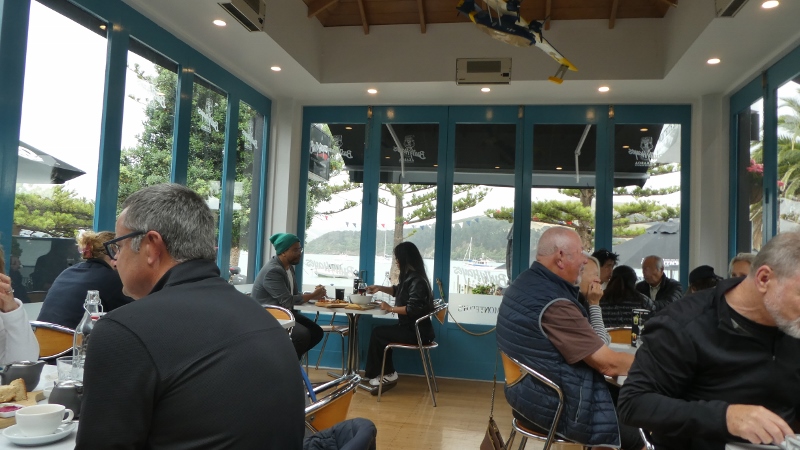
We ate in pleasant restaurants and cafes.And there were several nice outdoor areas for gazing out to sea while enjoying a brew!!!At the end of the day, we returned to the dock and boarded the tenders back to the ship.Leaving Akaroa, we headed to our next adventure on the North Island of New Zealand.
Next, we will visit 5 more cities on the North Island, completing the exploration of New Zealand













 RovingRaconteurs.com